
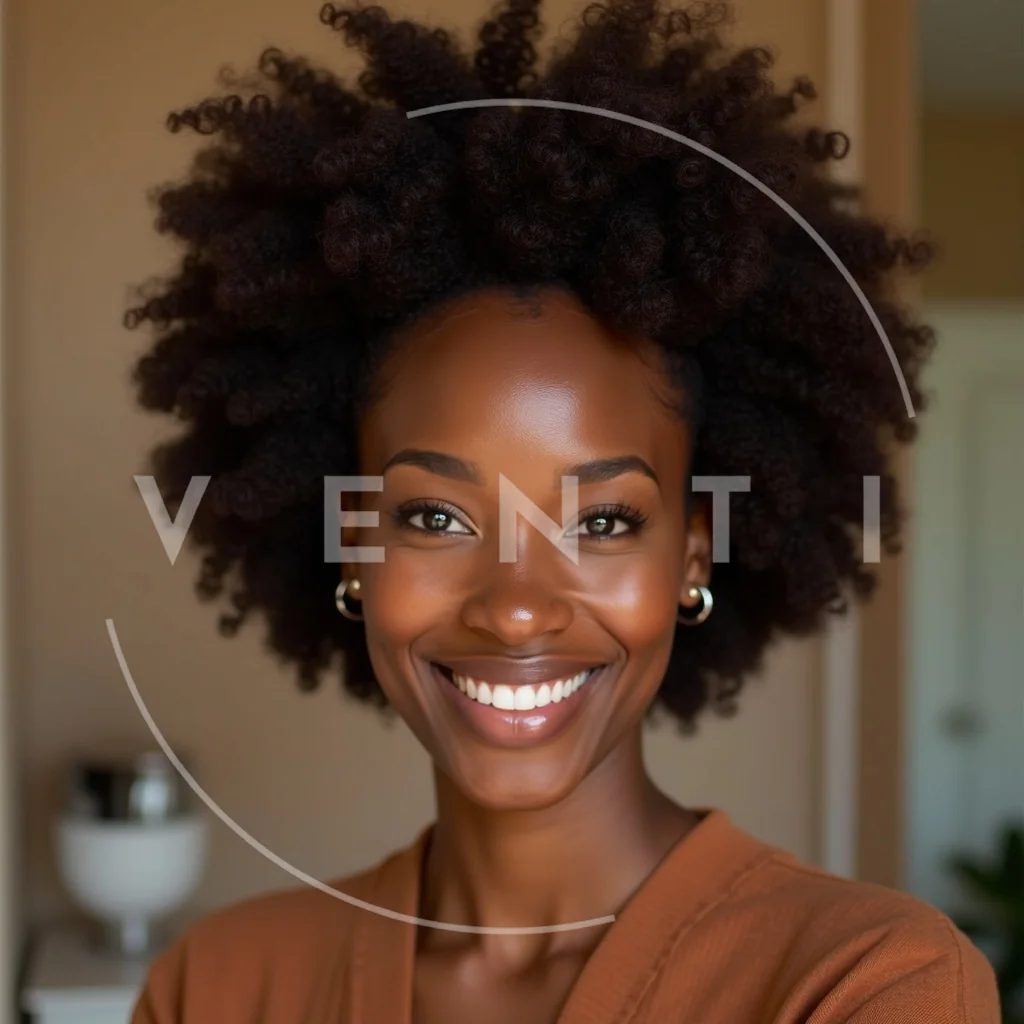
For many Black women, hair is more than a feature—it is identity, heritage, and self-expression. So when edges begin to recede, the crown thins, or years of protective styling leave permanent gaps, the emotional weight can be profound. The good news is that modern hair restoration has evolved to honor the unique structure of Afro-textured hair. At Venti Hair & Dental Center in Istanbul, our specialists understand the curl, the coil, and the contours that make your hairline beautifully your own. This guide explains traction alopecia treatment for Black women—from early non-surgical care to permanent restoration—and answers the questions you ask most about restoring edges, crown, and density.
What are the treatment options for traction alopecia?
Traction alopecia treatment depends on how far the hair loss has progressed. In the early stage—when the follicles are stressed but still alive—removing tension, switching to looser styles, and supporting the scalp with minoxidil or PRP can restore growth without surgery. Once the follicles are scarred and no longer produce hair, the only reliable treatment is a hair transplant that relocates healthy follicles into the thinned edges. Most women benefit from a combined approach: protecting the remaining hair while surgically restoring what has been permanently lost.
- Early-stage (non-surgical): reduce tension, minoxidil, PRP, and dedicated scalp care.
- Advanced or scarred (surgical): FUE or DHI hair transplant adapted for Afro-textured follicles.
Can thinning edges grow back, or do I need a transplant?
Thinning edges can grow back naturally if the damage is caught early—before the follicles are permanently scarred. Early-stage traction alopecia, where follicles are stressed but still alive, often recovers with reduced tension and treatment, but late-stage scarring requires a transplant to restore lost density.
The key distinction is whether your hair follicles are simply dormant or genuinely destroyed. In the early phase of traction alopecia, the hair around your temples and hairline may appear thinner, the strands finer, and small bumps or redness may form along the edges. At this stage, removing the source of tension—loosening your styles, taking breaks from extensions, and supporting regrowth with minoxidil or PRP—can coax those follicles back to life.
However, when tension continues for years, the follicles become surrounded by scar tissue and stop producing hair entirely. You may notice the skin at your edges looking smooth and shiny, with no visible follicle openings. This is permanent scarring alopecia, and no topical product can regenerate hair from a dead follicle. In these cases, a transplant is the only reliable way to bring density back, relocating healthy follicles from a donor area into the scarred or bald zones.
What causes thinning edges in Black women?
Thinning edges in Black women are most commonly caused by traction alopecia—repetitive pulling and tension on the hairline from tight protective styles. Braids, weaves, locs, cornrows, sew-ins, and tightly pulled buns gradually weaken the follicles along the temples and front edges, eventually causing hair loss.
Protective styling is meant to safeguard fragile coily hair, but when worn too tightly or for too long, it works against you. The hairline and temple regions have the finest, most delicate follicles, making them the first to surrender to chronic tension. Other contributing factors include:
- Heavy extensions and weaves that add constant downward weight on the natural hair.
- Chemical relaxers that weaken the hair shaft and irritate the scalp over time.
- Tight ponytails and edges-laid styles repeated daily for years.
- Genetic predisposition, including female-pattern thinning at the crown and part line.
- Central centrifugal cicatricial alopecia (CCCA), a scarring condition that begins at the crown and spreads outward.
Understanding the root cause matters because it shapes your treatment plan. A surgeon who restores your edges without addressing ongoing tension will see those grafts fail too. That is why our specialists assess both your hair history and your styling habits before recommending any procedure.
How does a hair transplant restore edges and hairline?
A hair transplant restores edges and hairline by relocating healthy follicles from a dense donor area, usually the back of the scalp, to the thinning zones using FUE or DHI techniques adapted for curved Afro follicles. The transplanted hair grows permanently, recreating a soft, natural hairline and fuller crown.
The challenge with Afro-textured hair is that the follicle curves dramatically beneath the skin—unlike the straighter follicles of other hair types. A surgeon unfamiliar with this anatomy risks slicing through grafts during extraction, wasting precious follicles. At Venti, our team uses specialized punches and a careful angled technique designed specifically for coily, curled follicles, preserving graft integrity and protecting your natural curl pattern.
FUE for Afro-textured hair
Follicular Unit Extraction (FUE) removes individual follicular units one by one, leaving no linear scar—an important consideration for women who wear updos or shorter styles. The curved nature of Afro follicles demands a slower, more deliberate extraction with instruments matched to the curl, which is precisely how our specialists approach every case.
DHI for precise edge restoration
Direct Hair Implantation (DHI) uses a specialized implanter pen to place each graft at a controlled angle and depth, giving the surgeon exceptional precision over direction and density. For restoring delicate edges and crafting a feminine hairline, DHI allows the natural curve and irregular pattern that makes a hairline look authentically yours rather than artificially straight.
Many of our patients combine their hair restoration with a complete aesthetic refresh. If you are considering improving your smile alongside your hairline, our combined hair transplant and dental makeover in Istanbul brings both transformations together in one efficient, well-coordinated trip.
Am I a good candidate for a female Afro hair transplant?
You are likely a good candidate for a female Afro hair transplant if you have stable hair loss, a healthy donor area at the back or sides of your scalp, and permanent edge or crown thinning that has not responded to non-surgical treatment. A specialist consultation confirms candidacy.
The ideal candidate shares several characteristics. First, your hair loss should be stable or well-managed, because ongoing active loss can undermine results. Second, you need sufficient donor density—the follicles at the back and sides of the head are typically resistant to the hormones and tension that cause hairline loss, making them the perfect source. Third, your expectations should be realistic and well-informed.
Certain conditions require extra care. If you have CCCA or another scarring alopecia, the inflammation must be controlled and stable before any surgery, otherwise the new grafts may be lost to the same process. Our specialists evaluate scalp health, donor reserves, and the underlying cause during your consultation to design a plan that protects your investment. Because every woman’s situation differs, exact pricing is never one-size-fits-all—we provide a personalized estimate through a free consultation rather than a generic quote.
- Good candidates: stable traction alopecia, established edge loss, crown thinning with healthy donor hair.
- Needs management first: active CCCA, uncontrolled scalp inflammation, ongoing tight styling habits.
- May not be ideal: very limited donor density or unrealistic density expectations.
What does recovery and regrowth look like?
Recovery from an Afro hair transplant follows a predictable timeline: the scalp heals within the first one to two weeks, transplanted hairs shed around weeks two to four, new growth begins at three months, and full, mature density appears between twelve and eighteen months after the procedure.
Understanding this journey helps you stay patient, because the early weeks can feel discouraging if you do not know what to expect. Here is how it typically unfolds:
- Week 1: Small scabs form around each graft and the donor area heals. Mild swelling and tenderness are normal and fade quickly with proper aftercare.
- Weeks 2 to 4: The transplanted hairs shed—this is completely expected and called “shock loss.” The follicles remain safely in place beneath the skin, preparing to grow.
- Month 3: Fine new hairs begin to emerge. They may initially appear thin and may not yet show your full curl pattern.
- Months 6 to 9: Density visibly increases, and your natural coil and texture return as the hairs mature.
- Months 12 to 18: Final results are realized, with full thickness, restored edges, and a crown that blends seamlessly with your existing hair.
Throughout this period, gentle care is essential—avoiding tight styles, harsh chemicals, and tension on the new grafts. Our team provides detailed aftercare guidance tailored to coily hair so your results are protected from day one.
Will my hairline look natural and feminine?
Yes—a well-designed female Afro hairline looks natural and feminine because the surgeon recreates soft, rounded contours rather than a straight or angular line. By placing grafts at the correct curved angle and varying density at the edges, the result frames your face gently and matches your original hairline.
A feminine hairline differs meaningfully from a masculine one. It sits slightly lower, features a softer rounded shape across the forehead, and avoids the sharp recession points common in men. For Black women, the artistry also lies in honoring the natural irregularity of the hairline—real edges are never perfectly uniform, and a skilled surgeon builds in subtle variation so no one can tell you have had a procedure.
The preserved curl is what truly sells the result. Because our specialists protect the follicle’s natural curve during extraction and implantation, your transplanted hair grows in with the same coil and texture as the rest of your hair, blending invisibly. The goal is never to give you someone else’s hairline—it is to restore the one you were always meant to have.
Frequently Asked Questions
Is an Afro hair transplant different from a regular hair transplant?
Yes. Afro-textured hair has follicles that curve sharply beneath the skin, so the surgeon must use specialized instruments and an adapted angled technique to extract and implant grafts without damaging them, all while preserving your natural curl pattern.
How many grafts do I need to restore my edges?
Edge restoration typically requires a smaller, precise number of grafts compared to full crown work, but the exact amount depends on the size and severity of your thinning. A specialist confirms your graft count during a free consultation.
Can I get a transplant if I have CCCA or scarring alopecia?
Possibly, but only once the condition is stable and inflammation is well controlled. Transplanting into actively inflamed scarred tissue risks losing the new grafts, so our specialists evaluate and stabilize the scalp first before recommending surgery.
Will I be able to braid or style my hair again after a transplant?
Yes, once your scalp has fully healed and the grafts have matured—usually after twelve months. However, we strongly advise avoiding tight styles that caused the original tension, to protect your restored hairline for the long term.
How much does a female Afro hair transplant cost in Istanbul?
Costs vary based on graft numbers, technique, and your individual plan, with Istanbul offering significant savings versus US clinics. We provide a personalized price range through a free consultation rather than a fixed quote, so book a consultation to learn more.
Related Treatments
- Female Hair Transplant in Istanbul: Discreet, Natural-Looking Results for Women
- Afro Female Hair Transplant in Istanbul: Specialist Care for Curly Textured Hair
- Afro & Black Hair Transplant in Istanbul: Specialized FUE for Coily Hair
- Hair Transplant Cost: Italy vs Turkey (2026)
Related articles
- Stem Cell Hair Transplant in Istanbul: Regenerative Hair Restoration
- Afro Female Hair Transplant in Istanbul: Specialist Care for Curly Textured Hair
- Afro & Black Hair Transplant in Istanbul: Specialized FUE for Coily Hair
- DHI Hair Transplant in Istanbul: Precision Density with the Choi Pen
- Beard & Mustache Transplant in Istanbul: Natural, Permanent Facial Hair Restoration
