
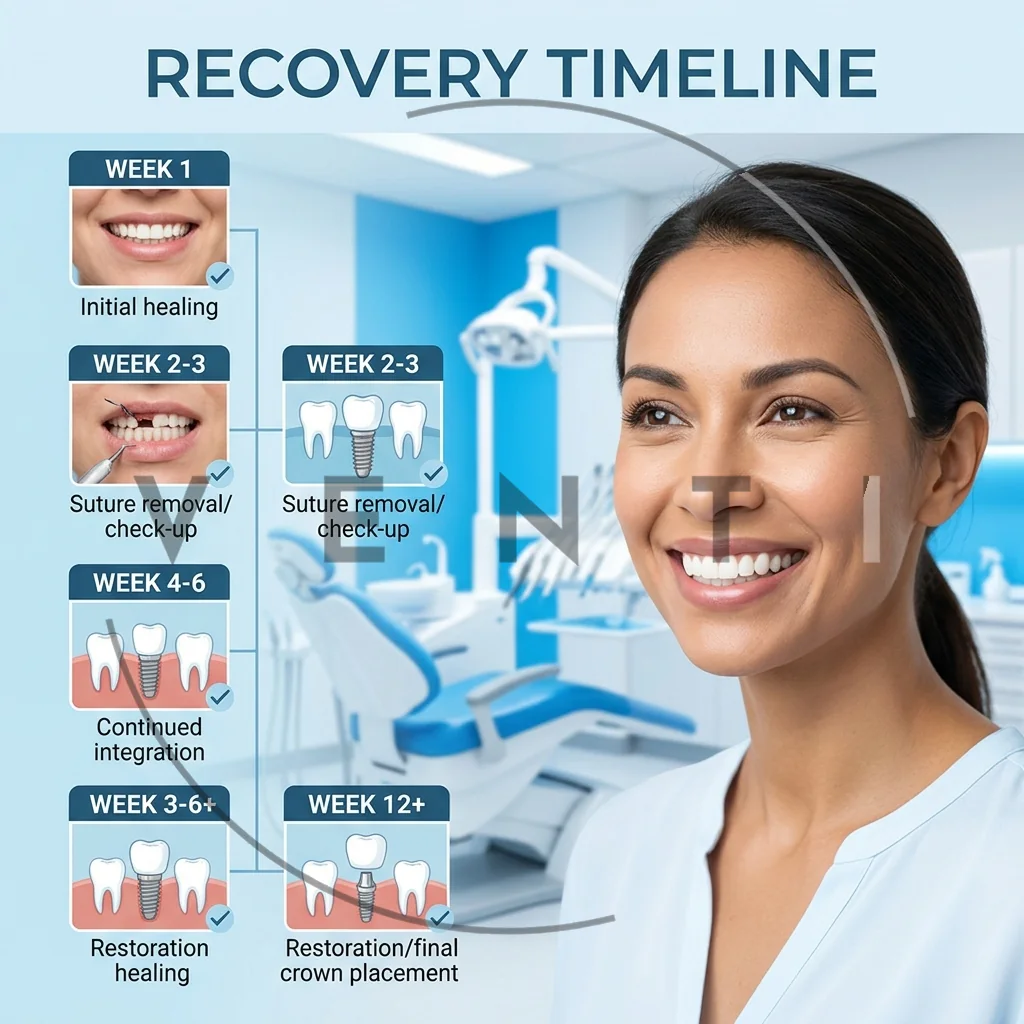
Getting a dental implant is one of the most reliable ways to replace a missing tooth, with success rates above 95% in healthy patients. But understanding what happens after surgery is just as important as the procedure itself. This week-by-week guide explains the complete dental implant recovery timeline, what sensations are normal, what could slow your progress, and why thousands of international patients confidently fly home to the USA and Europe shortly after treatment in Istanbul.
How long do dental implants take to heal?
Dental implants heal in two phases: the gum tissue closes within 1 to 2 weeks, while the deeper process of osseointegration—where the implant fuses with your jawbone—takes 2 to 4 months in the lower jaw and 3 to 6 months in the upper jaw. The final crown is placed only after full integration.
This staged approach exists because the implant post must become permanently anchored before it can support chewing forces. The lower jaw (mandible) is denser and heals faster, while the upper jaw (maxilla) is softer and more porous, so it needs additional time. Your surgeon may place a temporary restoration during this window, but the permanent crown, bridge, or denture comes last—after imaging confirms the bone has fully embraced the implant.
The three core stages at a glance
- Soft-tissue healing (Weeks 1–2): gums close, swelling subsides, sutures dissolve or are removed.
- Osseointegration (Months 2–6): bone grows around and bonds to the titanium implant.
- Restoration (after integration): abutment and final crown attached, completing your new tooth.
What should I expect in the first 24 to 48 hours after implant surgery?
In the first 24 to 48 hours you should expect mild swelling that peaks around 48 to 72 hours, minor oozing of blood that tints your saliva pink, and manageable tenderness controlled by prescribed medication. Applying ice in 20-minute intervals during the first day dramatically reduces inflammation and discomfort.
This early phase is your body launching its natural healing response, so some reaction is completely expected. To support recovery and stay comfortable, follow these guidelines:
- Ice protocol: Apply a cold pack to the outside of your cheek for 20 minutes on, 20 minutes off, throughout the first day.
- Control bleeding: Bite gently on gauze for 30–45 minutes; light oozing for several hours is normal.
- Rest your head elevated: Sleep with an extra pillow the first two nights to limit swelling.
- Avoid disturbance: Do not rinse vigorously, spit forcefully, use straws, or touch the site with your tongue or fingers.
- Take medication as directed: Use antibiotics and pain relief exactly as your clinician prescribes.
Heavy, persistent bleeding, fever, or escalating pain after 72 hours are not typical—contact your clinic promptly if these occur.
What does the first week of implant recovery look like?
The first week of implant recovery centers on a soft-food diet and gentle care, with most patients feeling significantly better and close to normal by day 5. Swelling and bruising fade steadily, and routine daily activities like working at a desk can usually resume within two to three days.
Think of week one as the transition from acute healing to comfortable maintenance. Your priority is protecting the surgical site while it knits together.
Eating during week one
Stick to nourishing, soft foods that require little to no chewing near the implant:
- Smoothies, yogurt, and protein shakes (spoon them—no straws)
- Mashed potatoes, scrambled eggs, and soft pasta
- Soups and broths served warm, never hot
- Oatmeal, blended fruits, and well-cooked vegetables
Avoid crunchy, spicy, acidic, or very hot foods that can irritate the wound. Chew on the opposite side of your mouth whenever possible.
Oral hygiene in week one
Keeping the area clean prevents infection, but you must be gentle. After the first 24 hours, begin a warm saltwater rinse (half a teaspoon of salt in a cup of warm water) several times daily, especially after meals. Brush your other teeth normally and clean around the implant area carefully with a soft-bristled brush as your clinician advises.
When is a dental implant considered fully healed?
A dental implant is considered fully healed once osseointegration is complete—when the titanium post has biologically fused with the surrounding jawbone, typically 2 to 4 months for lower implants and 3 to 6 months for upper implants. Only then can the permanent crown safely bear full chewing loads.
Osseointegration is the scientific cornerstone of modern implant dentistry. During this period, bone cells (osteoblasts) grow directly onto the microscopically textured implant surface, locking it in place as securely as a natural tooth root. You generally won’t feel this happening; it occurs silently beneath the gumline.
Before attaching the final restoration, your dentist confirms successful integration through clinical testing and X-ray or 3D imaging. Patients who combine implants with other smile-enhancing treatments—such as those exploring a combined hair transplant and dental makeover in Istanbul—follow this same biological timeline, with the full-mouth restoration completed once the bone is ready.
What can slow down dental implant healing?
Several factors can slow dental implant healing, with smoking, uncontrolled diabetes, poor oral hygiene, and low bone density being the most significant. Each of these reduces blood flow, impairs bone formation, or increases infection risk, potentially delaying osseointegration or compromising the implant’s long-term success.
Understanding these risks lets you actively protect your investment:
- Smoking and tobacco: Nicotine constricts blood vessels and starves healing tissue of oxygen. This is the single biggest controllable risk factor. Avoiding tobacco for at least two weeks before and several weeks after surgery markedly improves outcomes.
- Uncontrolled diabetes: High blood sugar slows wound healing and raises infection risk. Well-managed diabetes, however, is generally compatible with successful implants.
- Poor oral hygiene: Bacteria around the implant can cause peri-implantitis, an inflammatory condition that threatens the bond between bone and implant.
- Low bone density or volume: Insufficient bone may require grafting first and can extend the integration timeline.
- Certain medications and conditions: Some immunosuppressants, steroids, and untreated gum disease can interfere with healing.
The good news is that most of these factors are manageable. A thorough pre-treatment assessment identifies any concerns early, and your care team will tailor recommendations to give your implant the best possible chance to thrive.
Can I fly home after dental implant surgery in Turkey?
Yes, you can fly home after dental implant surgery in Turkey, because modern implant placement is minimally invasive and most patients are comfortable to travel within a few days. International clinics structure treatment around your itinerary and provide virtual follow-up care to monitor healing once you return to the USA or Europe.
Flying itself does not harm a healing implant—cabin pressure has no negative effect on the surgical site. Most surgeons recommend waiting at least 2 to 3 days after the procedure before a long flight, simply so any peak swelling has passed and you travel in comfort.
How treatment is planned for international patients
Reputable Istanbul clinics design your stay so that surgery, recovery time, and pre-departure checks all fit within your visit. A typical plan includes:
- Pre-arrival virtual consultation and review of your scans or X-rays
- In-person examination, 3D imaging, and implant placement on arrival
- A short recovery window in Istanbul with a post-operative check before you leave
- Detailed home-care instructions, medications, and emergency contact details
- Scheduled virtual follow-ups to track healing and plan your return for the final crown
Because osseointegration takes several months, the permanent restoration is usually placed during a second, shorter trip—or coordinated with a trusted local dentist when appropriate. This two-stage approach is standard worldwide and ensures your implant heals correctly before it carries any load.
Staying safe while traveling and after
To protect your implant during travel and the weeks that follow, keep up with your saltwater rinses, take prescribed medication on schedule, stay hydrated, and avoid alcohol and smoking. Pack soft snacks for your journey and carry your clinic’s contact information. If you notice unusual pain, swelling that worsens after the first week, or any signs of infection, reach out to your care team immediately for virtual guidance.
What affects the cost of dental implants in Istanbul?
The cost of dental implants in Istanbul depends on the number of implants, the implant brand, whether bone grafting is needed, and the type of final restoration. Istanbul typically offers prices in the range of a few hundred to a couple of thousand USD per implant—substantially below US and Western European averages—while maintaining high clinical standards.
Because every smile is different, exact pricing can only be confirmed after reviewing your individual case. The best way to get an accurate, personalized estimate is to request a free consultation, where our team reviews your scans and goals before recommending a treatment plan and transparent cost breakdown.
Frequently Asked Questions
How long after a dental implant can I eat normally?
Most patients return to a soft-food diet immediately and reintroduce a normal diet within 1 to 2 weeks, once the gums have healed. However, full chewing on the implant itself should wait until the permanent crown is placed after osseointegration is complete.
Is dental implant surgery painful during recovery?
Implant surgery is typically performed under local anesthesia and is not painful during the procedure. Afterward, most patients experience only mild to moderate discomfort for a few days, easily managed with prescribed or over-the-counter pain relief and ice application.
How much swelling is normal after dental implant surgery?
Mild to moderate swelling is completely normal and usually peaks 48 to 72 hours after surgery before steadily subsiding. Applying ice during the first 24 hours and keeping your head elevated while resting helps minimize it significantly.
Can a dental implant fail during the healing period?
Implant failure is uncommon, occurring in fewer than 5% of cases, and is most often linked to smoking, infection, uncontrolled diabetes, or poor oral hygiene. Following aftercare instructions and attending follow-ups greatly reduces this small risk.
Do I need to return to Istanbul for the final crown?
Because osseointegration takes several months, the permanent crown is usually placed during a second, shorter trip to Istanbul or coordinated with a local dentist where appropriate. Your clinic plans this timeline with you in advance for a smooth, predictable experience.
